

AI-Summary – News For Tomorrow
The FDTA is driving a data revolution by shifting compliance to machine-readable formats, but requires organizational change beyond technology, including cultural and skill shifts. Companies should prepare by assessing readiness, appointing cross-functional leaders, adopting scalable data architectures, and engaging with policymakers. The FDTA marks a move from static reporting to data-driven oversight, creating opportunities for efficiency and transparency. While investments in technology and retraining are needed, the potential benefits outweigh the costs. Success depends on industry leadership embracing data-driven compliance as a valuable asset rather than a regulatory burden, enabling a “submit once, use everywhere” approach.
News summary provided by Gemini AI.
Key takeaways:
-
-
-
FDTA drives a data revolution — The FDTA and structured business reporting are driving a shift to machine-readable data formats, which could fundamentally transform companies’ compliance processes.
-
Organizational change required — Successful adoption of the FDTA and structured business reporting requires not only technological upgrades but also significant cultural and skill changes within organizations.
-
Compliance in action — To successfully transition to data-driven compliance under the FDTA, organizations should conduct readiness assessments, appoint cross-functional leaders, adopt scalable data architectures, and actively engage with policymakers and vendors early in the process.
-
-
International data standardization and regulatory consistency directives began decades ago, and they represent lessons learned for domestic policy makers. FDTA legislation and structured business reporting designs represent the end of static reporting and the beginning of data-driven regulatory oversight. Both public agency and private industry leadership can treat the FDTA and structured business reporting as another regulatory mandate, or they can embrace it as the building blocks for financial data modernization in which compliance consistency can be a driver of efficiency, transparency, and competitive advantage.
From documents to data
While the FDTA will require organizations to invest in supporting data technologies, the longer-term efficiencies, elimination of duplication, and improved transparency must be balanced against data design and governance changes and staff retraining. In this way, the FDTA represents the initial starting point of rethinking regulatory compliance with an eye toward financial data modernization.
Indeed, structured business reporting will require strong collaborations between public agencies, auditors, software vendors, and financial institutions. And its adoption will continue to be debated until such time that efficiency gains outweigh the pains of operational and data transformations.
Practical impact of people
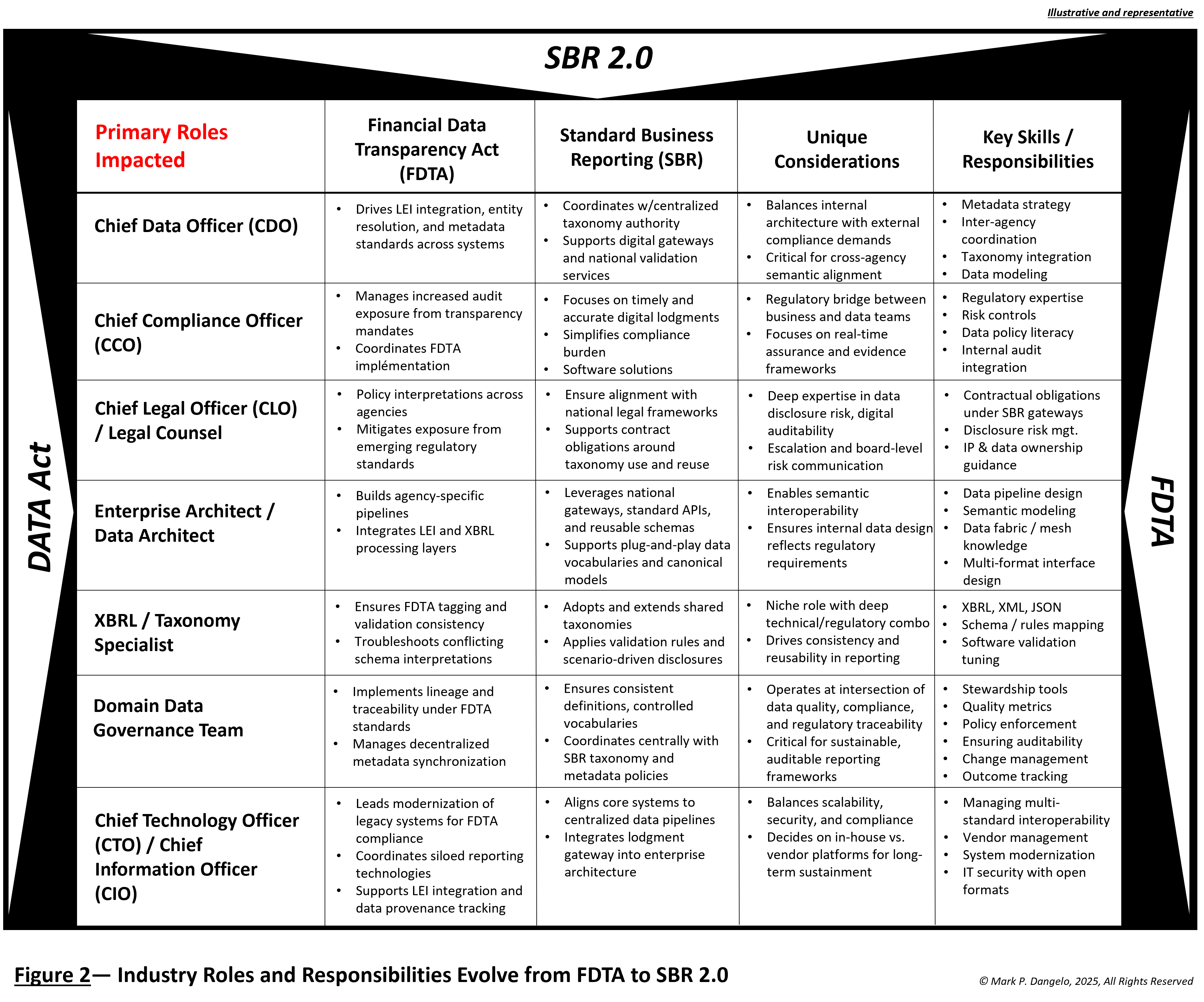
The chart below provides a snapshot of the differences using FDTA and structured business reporting as the catalyst for change.
The calls to action
The market demands are clear: Consistent compliance data is an economic imperative. Data modernization will not only meet public regulator demands but also will provide scalable data architectural building blocks that will improve organizations’ transparency, auditability, efficiency, and trust.
Institutions that thrive using the FDTA and structured business reporting will treat regulatory data not as a burden of regulatory compliance — but rather as data-driven, regulatory consistency asset that spans the organization. Indeed, US markets cannot scale the regulatory burdens any further — the FDTA and structured business reporting may represent an opportunity to permanently shift to data-driven submit once, use everywhere designs.
Of course, this all hinges on something unprecedented — industry taking the data-driven lead when it comes to financial data modernization and consistency around regulatory compliance.
You can find more blog posts by this author here

